
Voice of Session House 2021: Shintaro Hirahara
2021 was an extraordinarily busy year for Shintaro Hirahara, whose work included choreographing dance for the opening ceremony of the Tokyo Olympics. At Session House, too, he presented a compelling Dance Bridge work in which his finely detailed choreography drew movement out of each of five young dancers.
Shintaro Hirahara: “A Choreographer’s Presence, a Choreographer’s Voice”
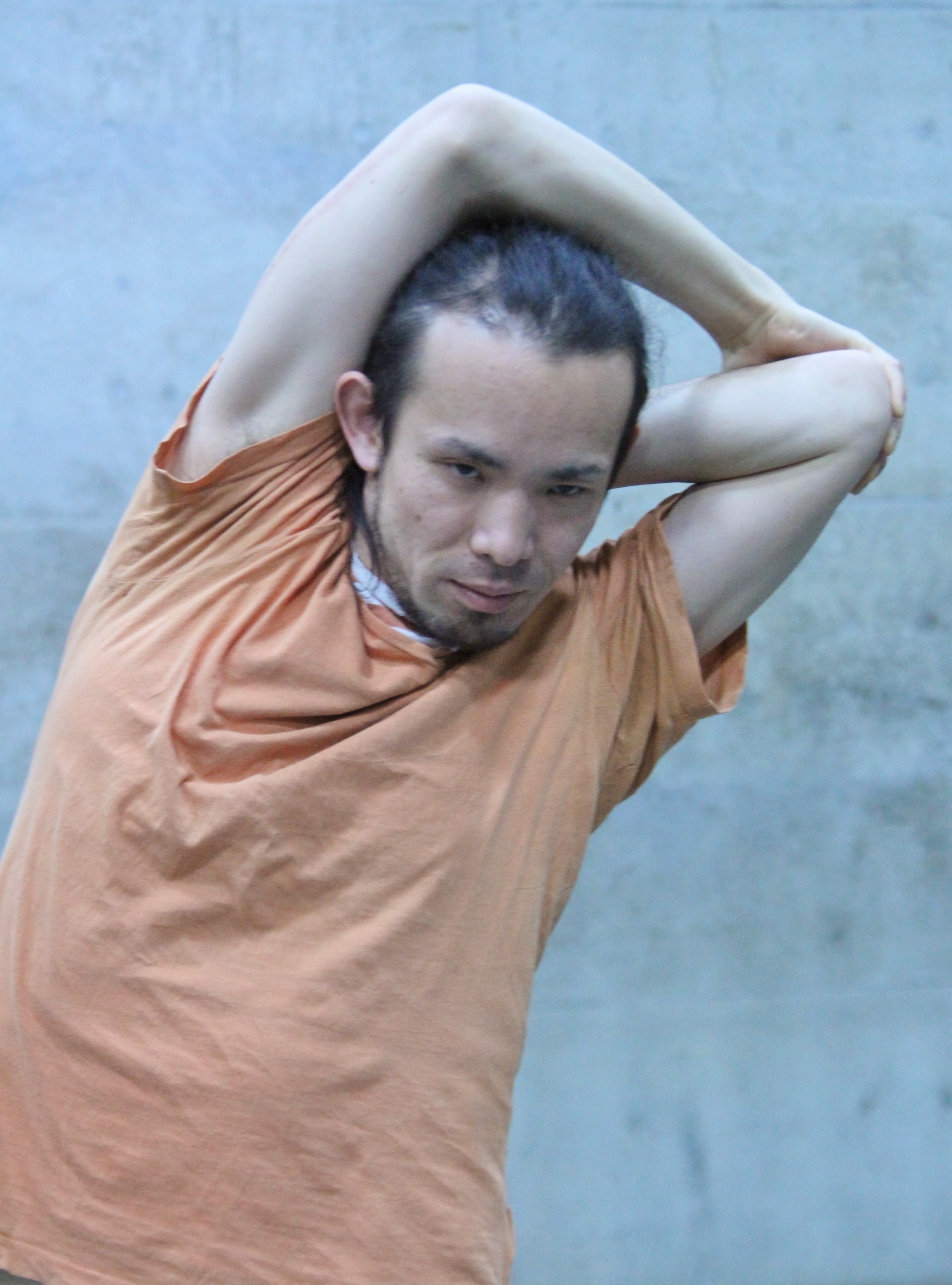
Shintaro Hirahara
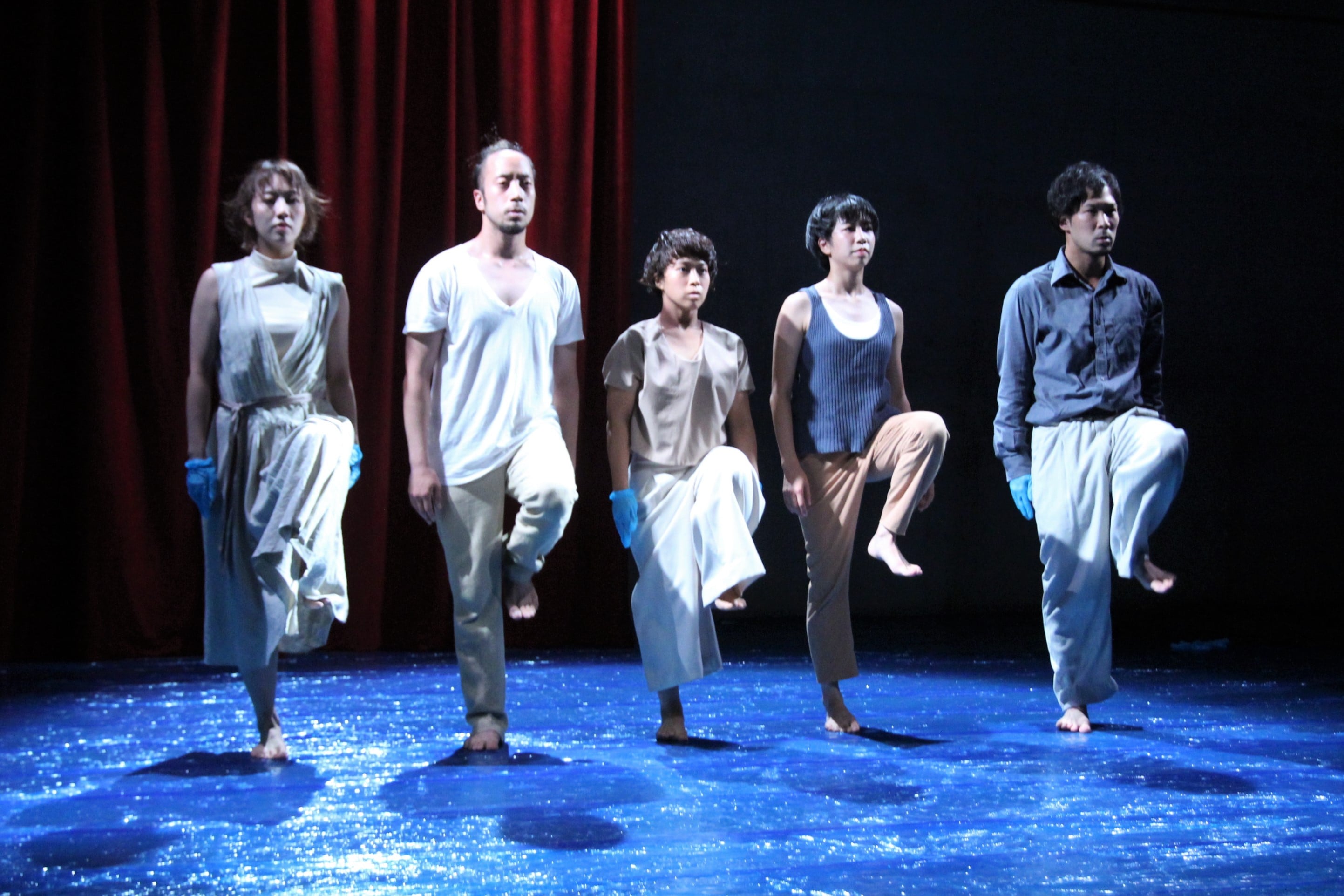
Dance Bridge 2021: “Too Enough Medium,” a performance supervised by Shintaro Hirahara
A choreographer’s presence
2021 was a year of profound shocks in my life. I had been involved in work for the Olympics since the end of the previous year, 2020, and spent more than eight months right in the midst of it. While being tossed this way and that by the authorities’ response to coronavirus, even when 2021 arrived, performances and events continued to be canceled or postponed one after another, just as in the previous year. Several powerful waves swept over me, including a complete change in my own living circumstances, and as the end of the year approached, the postponed performances arrived in a rush. It was truly a dizzying year. I think I have now been associated with Session House for nearly fifteen years, but that year I had less time to visit, and it remained difficult to talk about dance with Naoko and Takashi.
However, a Dance Bridge project hosted by Session House had already been scheduled for October 2021. Anticipating this busy situation, and taking in the coronavirus upheaval of 2020 as well, I had decided that I wanted to create a work that would, in a broad sense, serve as a metaphor for the nature of various “media” and the position of “journalism.” I do not normally have a TV around me and get my news on my smartphone, so I cannot say that I have a particularly timely grasp of what is happening in the world. Even so, this was a period when I had come to feel strongly that my impressions of them had changed in everyday life, and I thought it would make sense to turn those feelings into a work. If even I, someone who does “not” have such information media around me, was being somewhat tossed about by them, I thought they must have a considerable influence on people who “do” have them in their daily lives.
The word I chose was “medium,” taken from “media.” Medium means something in between, an intermediary; its plural is media.
Through the themes of my works, I consciously want to awaken in viewers a sense of personal involvement. Those who do not notice will not notice. But for those in whom that sense of involvement begins to grow, I try to induce a feeling that they themselves are being called out by name. Because this is a genre that speaks through the body, my guiding belief in making work is to devise ways of addressing people with pinpoint precision.
The dancers’ voices
Now, when a performance begins, the choreographer abruptly disappears from the stage. Usually we leave only a trace of our presence beyond the wings and entrust the rest to the dancers. Naturally, then, it is none other than the dancers and staff who actually put the values born during rehearsal into practice before you. During a performance, we choreographers can only pray and watch. So although what the dancers express through dance is my language, the bodies giving voice to it are theirs, and their own spirits must take it over and speak it. I believe that you must never hear my voice. The traces of it having been my language may disappear; it needs to be heard in their language, as their voices.
To put it in terms of this particular work, what I entrusted to them in this piece was the other side of a red curtain.
As for the structure of the work, first there is a single red curtain hanging at the back of the stage. Of the five performers, two know what is inside it. Those two encourage the other three to look inside the curtain. Their efforts bear fruit, and with time two of the three look, but one resolutely refuses to see what is behind it. Eventually that person escapes still farther beyond that place and becomes unable to breathe: that was the story.
I can articulate it this precisely now, but rehearsals are constantly in progress, constantly being updated. From a situation in which all of us are wrapped in dense fog, we have to find the contours of the work little by little and grasp them as a form. It really is like holding hands as we make our way along a mountain path in total bewilderment.
I explain to the dancers how I would dance it myself, but afterward I add that this is only one possible means, presenting it not as the “right answer” but as an “example.” There are many methods, and quite a few may lie dormant within them. Perhaps the “example” I give is itself a wrong answer. In any case, the question is whether it connects internally to their own motivations. On this occasion, I set them the task of making that connection, so that the voices they release onstage would become their own cries.
The universe behind the curtain
Lately, when I go to see performances, teach classes, or work in creative settings, what especially strikes me is how quiet the dancers’ voices are. Unfortunately, I remember that this was also the case at the first performance of this piece. I could not hear the dancers’ voices. They had technique, but I could hear no voice beyond it. It felt not like a silent film, but like watching without sound a film that ought to have a soundtrack. However, the point we must never misunderstand is that, while they bear some responsibility in this case, there are also shortcomings in my own way of communicating and in my attitude.
The difficulty of this kind of exchange is one of the great pleasures of staging original work, and it is a lovable wall that even we, working as a dance company, run into. I like this challenge.
After its Dance Bridge performances, we restaged the work in Sapporo. By then, they had reconsidered the work for themselves, and in that performance my voice had vanished completely. The dancers’ bodies spoke words that came from their own spirits, and “voices” became “cries”—in other words, the “steps” had finally become “dance.” In this way, the so-called fiction born in a choreographer’s mind—something imaginary, an image—becomes a tangible reality—something real, an object.
This work of making something from nothing goes on industriously until just a few minutes before you, the audience, step into the theater. We float and swim through that universe together. It is almost as though it is in sync with this particular work. Inside a curtain—a stage curtain—a hidden world stretches out. The next time we present a work at Session House, please do come and peer inside the curtain before you.
Shintaro Hirahara
Excerpt from Voice of Session House 2021
