
Voice of Session House 2021: Ryohei Kondo
Since founding Condors in 1997, Ryohei Kondo has undertaken numerous projects at Session House right up to the present. In April 2022, he took up a post at Saitama Arts Theater. He says that, however busy he becomes, his intention to cherish the possibilities of small theaters like ours remains unchanged.
Ryohei Kondo: “The Role of Large Theaters, the Role of Small Theaters”
Over these two years, not only the state of the world but also the circumstances surrounding me have changed considerably. In April of Reiwa 2 (2020), I became artistic director-designate of Saitama Arts Theater, and this April I will formally take up the position. Before I knew it, I had become a “theater person.” It feels strange, but I look forward to your continued support.
A thought or two about “theaters.”
Since 2000, the number of places where we perform regularly has increased, and we still maintain exchanges with cities such as Kyoto, Hakata, and Hiroshima. Yet the places I know, when all is said and done, are not so much the towns as their theaters and the areas around them. Everything still revolves around theaters.
Including performances abroad, I have encountered more “theaters” than I can hold in my memory. Around the world they vary enormously, from places like historic buildings to venues with royal boxes. Some have nowhere to retreat to, so once you go onstage you have to stay there throughout; others are so dimly lit that you cannot tell which way is the front. Each theater has its own flavor. There is actually a long road even before the performance itself. The source of a work seeps out from deep within the body, and in the rehearsal room we ponder this and that together with the dancers and performers. Then, finally, the space that becomes the “place of presentation” is the “stage,” a space that gives off light, and the theater. You might call it a “bento box.” Sometimes we pack a small box as full as we can; sometimes we roll around inside a large one. Having performed in all kinds of boxes, what matters is whether you feel, “I want to perform here, to express myself here!” That is what I think now. Rather than seeing Session House’s stage as a small space, or Saitama Arts Theater’s main hall as a fully equipped, versatile large stage, I think the important thing is whether you have something you want to give voice to in that place.
Those who perform and those who watch
What the creators of a work want to say matters, but I also want to take responsibility for how we deliver it to the audience and how we connect it to what comes next. As a viewer, I want to sit in the audience feeling as unrestricted and unconstrained as possible. Whether the dance is like a small announcement or unfolds amid extravagant acting, I am ready to receive it. And if the performers try to express a piece lightly, it comes across lightly; if they proceed with heavy, inscrutable expressions, it comes across as something inscrutable. That circuit through which something “comes across” is always delicate. A “sideshow-like” way of presenting work, which gives viewers complete freedom, might require a more active willingness to draw close to them, but I would like to try it someday. I feel that we could create that kind of relationship at Session House.
Duos in “Dance Bridge” and “Ringo Project”
This year I created duets for Dance Bridge and Ringo Project. A duet, rather than a solo, is the smallest unit of people that can create a mutual relationship. When I give voice to dance in a solo, I sometimes lose my emotional bearings. Solo expression also differs between a dance offered to people in front of you and one where the audience surrounds you on all sides.
By contrast, the exchange between two people in a duet brings the warmhearted side of human beings fully to the fore. So it is fun to create, and a little easier to watch. It is something like proof that human beings cannot live alone! There are more expressions that include moments of hearts touching, with the viewers—the audience—as well. In that sense, I think a duet is a dance of simple human relationships. Of course, expression involving more people is possible too, but the more people you add, the more complicated it becomes, and the content tends to grow sweet. Come to think of it, the name “Session House” means “a place for sessions.” In that sense too, perhaps the duet is what suits it.
In my twenties, I feel that “youth” consisted in the sheer headlong determination with which I pursued expression through dance. Doing it even if it was unreasonable, something like that. I think young people today throw themselves even more headlong into thinking, living, and dancing—or rather, I strongly hope they will. I want them to take us somewhere with that feeling of “I can’t let myself be beaten!” It is like using something up completely before throwing it away. To put it another way, there is no longer any need to “hold back.” I feel that what is being asked of us now is to treasure the “present” to the utmost. I want to take that firmly to heart and accept it sincerely myself.
Ryohei Kondo
Excerpt from Voice of Session House 2021
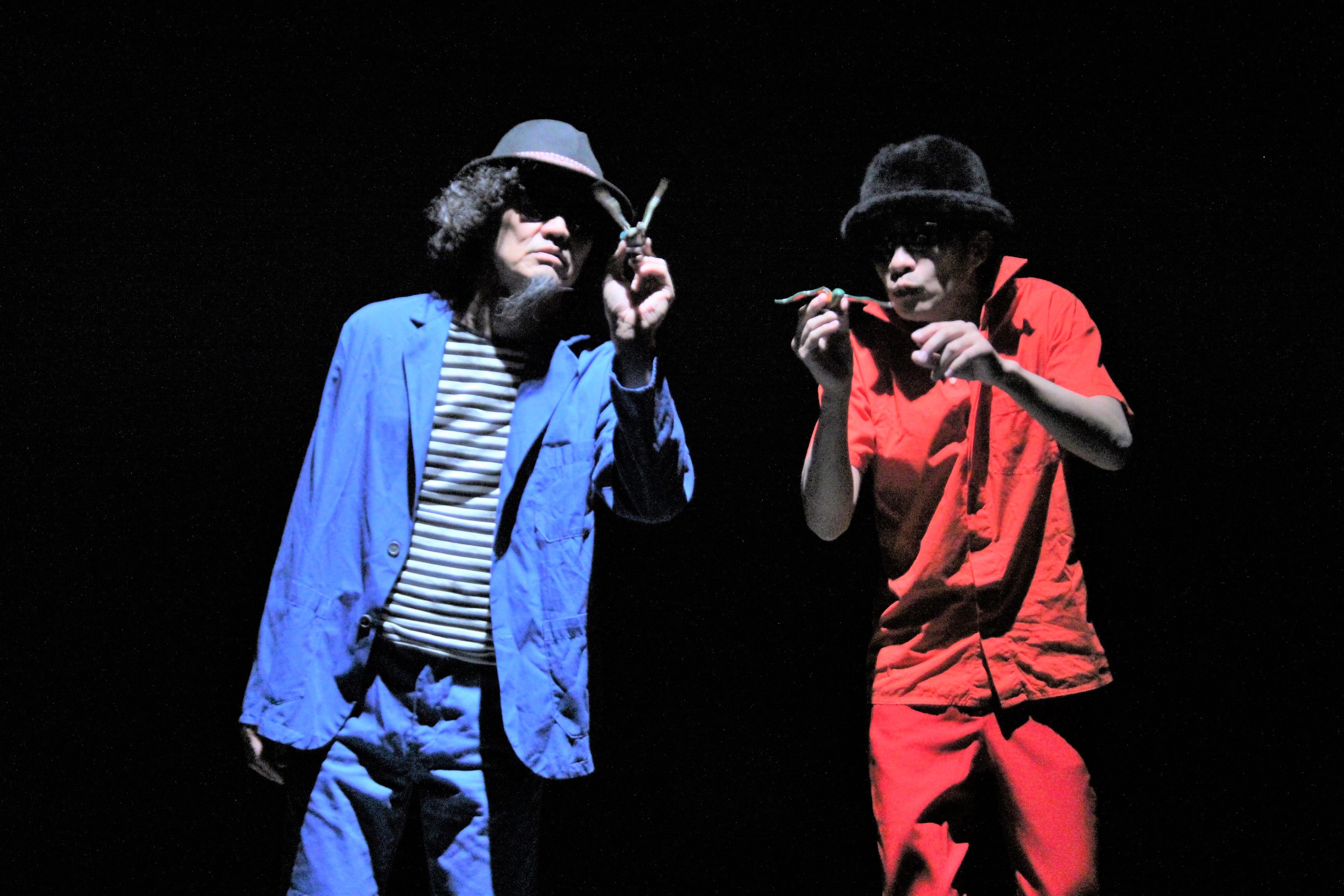
Ringo Project: Ryohei Kondo’s “The Hundred-Year Grand Strategy”—duo with Mitsutake Kasai
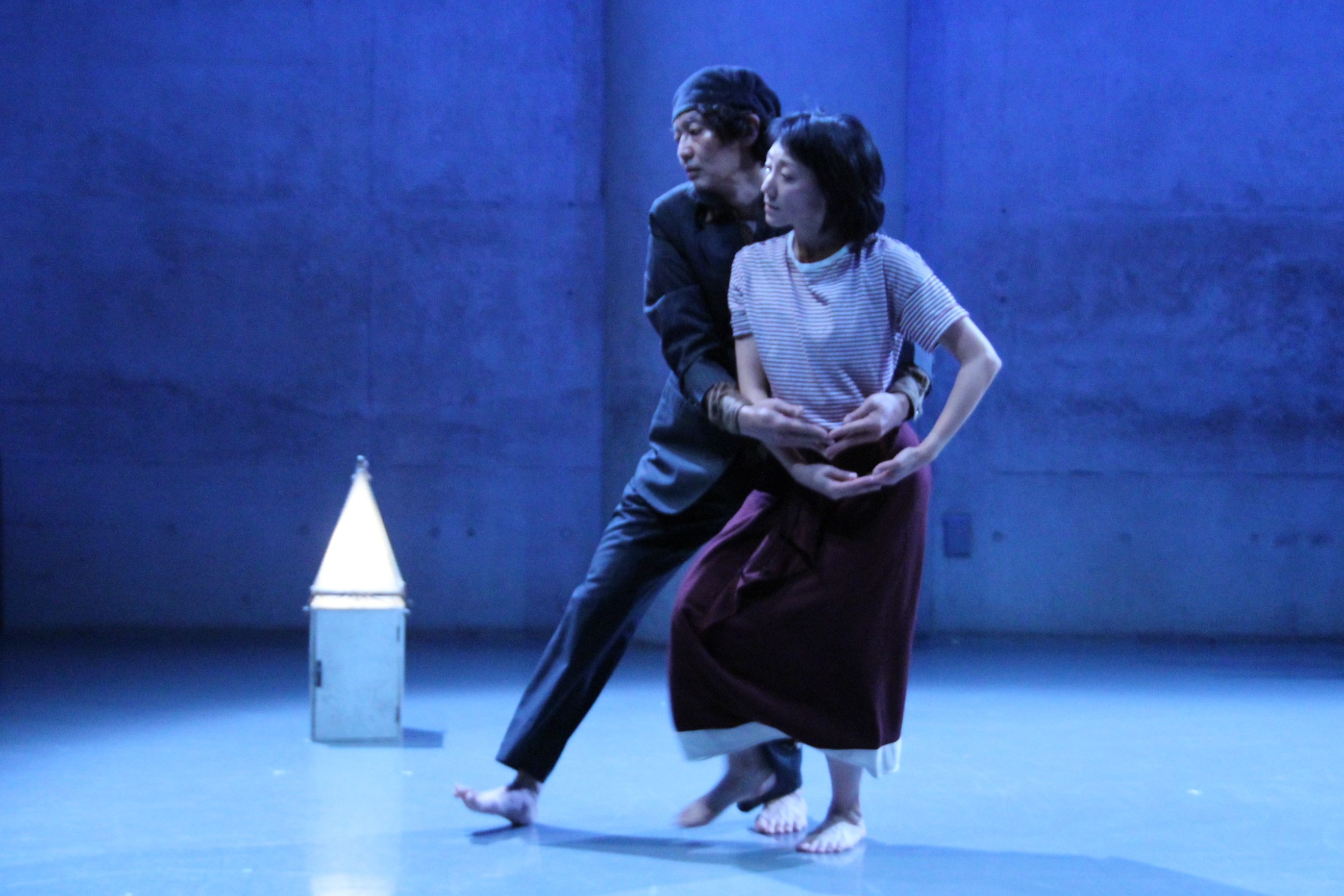
Dance Bridge: “The Road”—duo with Yuka Shinohe (四戸由香)
