
Voice of Session House 2020 — Garden Activity Report
Garden Activity Report
In 2020, Session House’s 2F Garden again served as a venue for independently produced and joint/cooperative projects, as well as rental exhibitions, talks, croquis sessions, and other activities. However, many planned projects were canceled or postponed during the coronavirus crisis under the state of emergency.
A Record of Independently Produced and Joint/Cooperative Projects
2020
February 4–8 — 4th Wawawa Haiku Exhibition (T)
February 11–16 — Instruments from the Kondo Household Exhibition
March 11–22 — Toos Meijer (ツーゼ・マイヤー) Exhibition, “Changes”
March 26–April 2 — 38th Shurafu Exhibition (organized by Sadao Ishida [石田貞雄])
July 3–15 — Art Exhibition for Bastille Day (T)
August 12–16 — dancecafe Stage Photography Exhibition
August 17–23 — Kagurazaka: A Summer Dream Exhibition (T)
September 29–October 7 — Seiho Suzuki (鈴木聖峯) Exhibition (T)
November 1–3 — 20 Steps Exhibition
November 18–25 — Yuko Ichino (市野裕子) Exhibition, “Goblin: Children at Our Feet”
November 28–December 8 — Noël Exhibition (T)
December 9–13 — 11th Atelier Roseau Exhibition
December 15–20 — Each One’s Works Exhibition (T)
※ (T) indicates projects produced and planned by Norio Toyoda (豊田紀雄) of Engeki Bijutsusha (演劇美術社).
※ The croquis sessions organized by Takushi Yoshida (吉田卓史) were held 25 times.
※ Ichie Watanabe’s talk series “Let’s Listen to the Voices of Fukushima!” was held in February and November.
At the Garden too, visitors dropped sharply around the time of the Shurafu Exhibition in March, when signs of the spread of the novel coronavirus began to appear. After that, scheduled exhibitions, readings, and other events were postponed. Some exhibitions were nevertheless held with measures to prevent infection, but it was a year of continued searching. Amid these difficult circumstances, we asked Takushi Yoshida (吉田卓史), who has continued organizing the croquis sessions, to contribute his thoughts from this past year.
Takushi Yoshida (吉田卓史): “What Did I Think About While Drawing During the Coronavirus Crisis?”
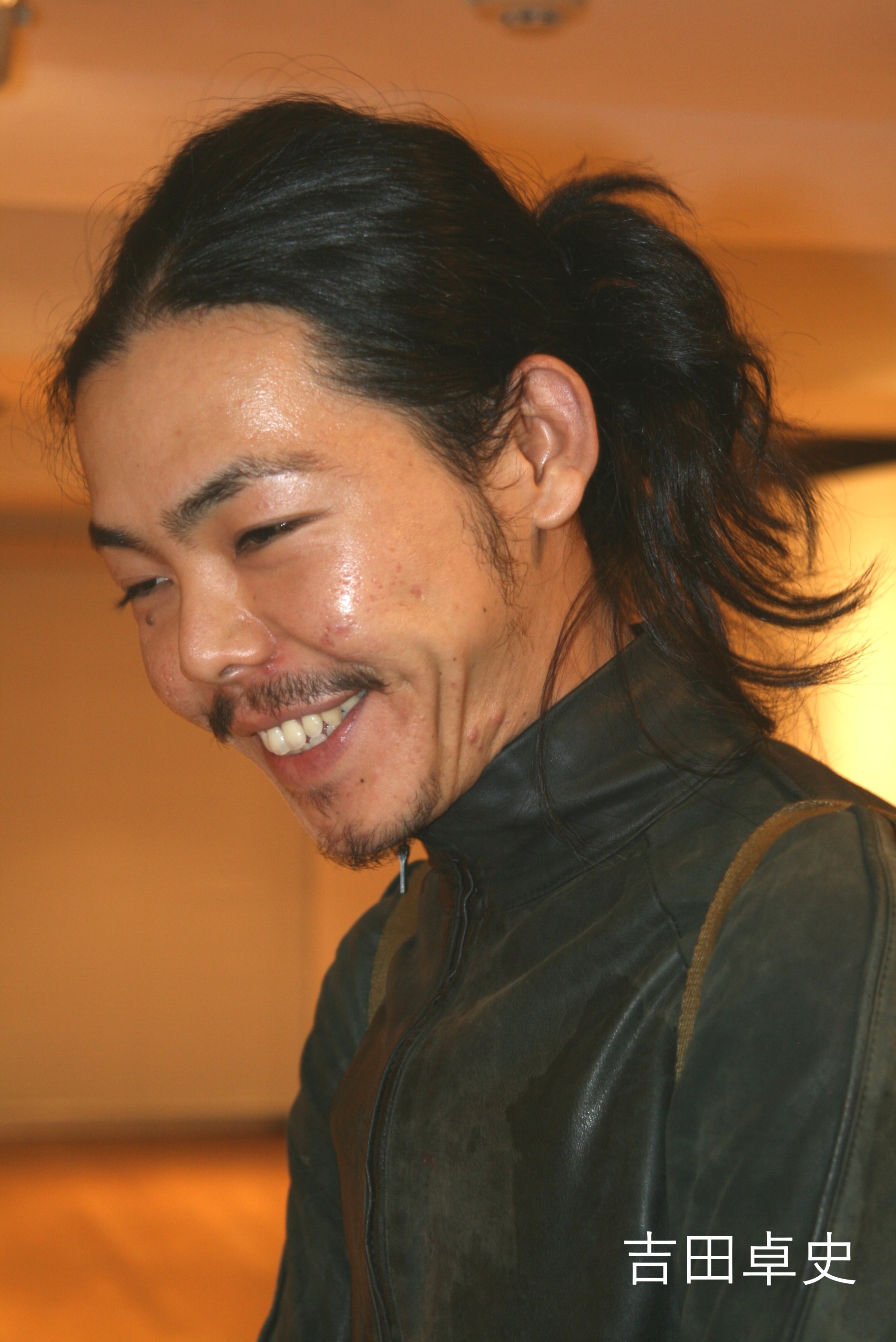
I came to Tokyo from the countryside of Wakayama more than 20 years ago in order to paint. At Session House, I have held several solo and group exhibitions, and croquis sessions as well. There was a period when I refrained from holding those croquis sessions because of the novel coronavirus, but now, with the cooperation of all the participants and the dancers who serve as models, perhaps the sessions have become more intensely focused than before. That may be because, in a world where virtual things are beginning to take the place of reality, it is precisely under these circumstances that each of us feels the importance of observing and drawing a model—a human being—who actually exists physically. Because it is live, it is an experience that resonates very directly with our emotions, and the information we receive from each dancer for drawing is very precious. Not just shape and movement: by actually sensing and drawing a presence that also has, for example, texture, body temperature, breathing, and emotions, I think there are many discoveries to make. Amid the spread of infection, I feel we have been able to continue these croquis sessions with a truly wonderful intensity, more than ever before.
As for changes in my own surroundings, actually, not much has changed. I was already living on the edge, and I am in Tokyo hoping that someday I will be able to paint good pictures. But I feel I have come to think more than before about my purpose and motivation for being here, and about
what I consider really, really important. This is something I had felt since spending about a year backpacking around continental Europe: what fits in a backpack is limited, and the same is true in our awareness. If we could choose what truly matters, we would not have to feel anxiety or attachment about losing something that is actually trivial. Yet in the city, that feeling seems to fade, gradually but surely. That is probably because I have let slip my strong awareness of what I should challenge myself to do and what is really, really important, or my willingness to firmly reject things for its sake. I feel that this global crisis of spreading novel coronavirus infections has given that self of mine another opportunity to think that I should seriously reaffirm the meaning and reasons for my being here, now.
Takushi Yoshida (吉田卓史)
Excerpt from Voice of Session House 2020
The talk series “Let’s Listen to the Voices of Fukushima!” was also postponed once,
but was held in November with attendance limited. This year, ten years after the Great East Japan Earthquake and the Fukushima nuclear accident, it reached its 36th meeting on March 21. We asked its organizer, writer Ichie Watanabe, to share her feelings about the series.
Ichie Watanabe: “Let’s Listen to the Voices of Fukushima!” — Hoping That Continuity Will Become Strength
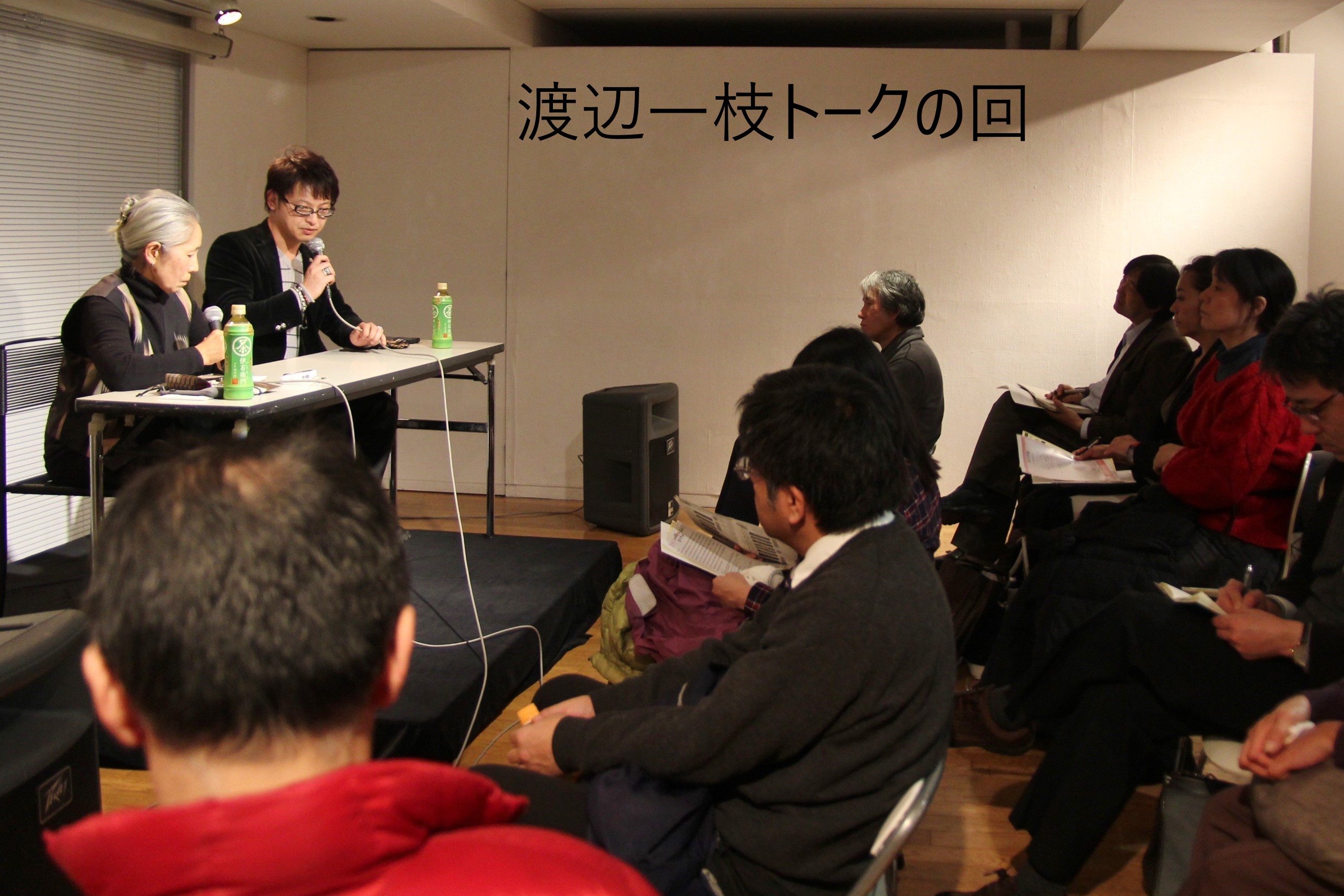
Ten years have passed since the “Great East Japan Earthquake and the accident at Tokyo Electric Power Company’s Fukushima Daiichi Nuclear Power Station.” Since the summer of that year, I have been visiting Fukushima and listening to survivors’ voices. I have contributed their words to magazines too, but I felt that, even if I conveyed them in writing, they were only words that had passed through “me.” I wanted the survivors’ feelings to reach many people in the voices and words of those who had spoken to me. When I consulted Ito at Session House about wanting to hold gatherings to listen to survivors’ voices, the proposal was accepted immediately and without hesitation.
Thus we held the first “Talk Gathering: Let’s Listen to the Voices of Fukushima!” on March 7, 2012, one year after the disaster. Since then, we have continued, though at irregular intervals, and this March, ten years after the disaster, we reach our 36th meeting.
Ten years on, the appearance of the affected areas has visibly changed. Expressways have opened, old roads have been repaired and widened, and transport has improved dramatically. The Joban Line has reopened, and the station buildings along the section that had been out of service have been renewed. Okuma Town has a splendid municipal office, and reconstruction housing stands nearby. Public housing has been built in other areas too. In towns and villages whose populations fell because residents evacuated, schools have been consolidated, and new school buildings have been constructed for that purpose. Impressive “roadside stations” have appeared in many places, usually with an “industrial exchange center” next to them. Various facilities relating to the earthquake and the nuclear accident have also been built: “Commutan Fukushima, the exchange building of the Fukushima Prefectural Centre for Environmental Creation,” the “Decommissioning Archive Center,” and “Reprun Fukushima, the Information Center for Specified Waste Landfill.” Last September, the “Great East Japan Earthquake and Nuclear Disaster Memorial Museum” was completed.
The media takes up these visible things and broadcasts them as images of “recovery,” but can we say there has been recovery simply because these buildings have been built? No. True recovery is when survivors can regain the peaceful days they had before the disaster.
More than 60,000 people still live where they evacuated, hiding where they are from to avoid bullying. Even among those who evacuated and then returned, many have not regained the foundations of their former lives. Medical institutions and care facilities have closed; schools have been consolidated; many shops have shut, making shopping inconvenient; bus routes have been discontinued, and so on. The reality is that life has become difficult for residents too.
“Talk Gathering: Let’s Listen to the Voices of Fukushima!” is a series we have continued in order to hear these survivors’ voices.
What I have come to think through continuing the series is that every person’s experience is different, and each time I listen to them, I learn how immense and serious the harm from the nuclear accident is. I believe that restarting nuclear reactors must never be allowed to happen. Fukushima’s survivors are giving us a warning. I want to continue this series until all nuclear power plants are decommissioned.
※ The second collection of records, “Let’s Listen to the Voices of Fukushima! PART 2: Ten Years Since Then, Nine Testimonies,” will be published soon by Furaisha (風來舎).
Ichie Watanabe
Excerpt from Voice of Session House 2020
