
Voice of Session House 2020 — Kenzo Kusuda’s Letters from the Netherlands
Kenzo Kusuda: “Kenzo Kusuda’s Letters from the Netherlands”
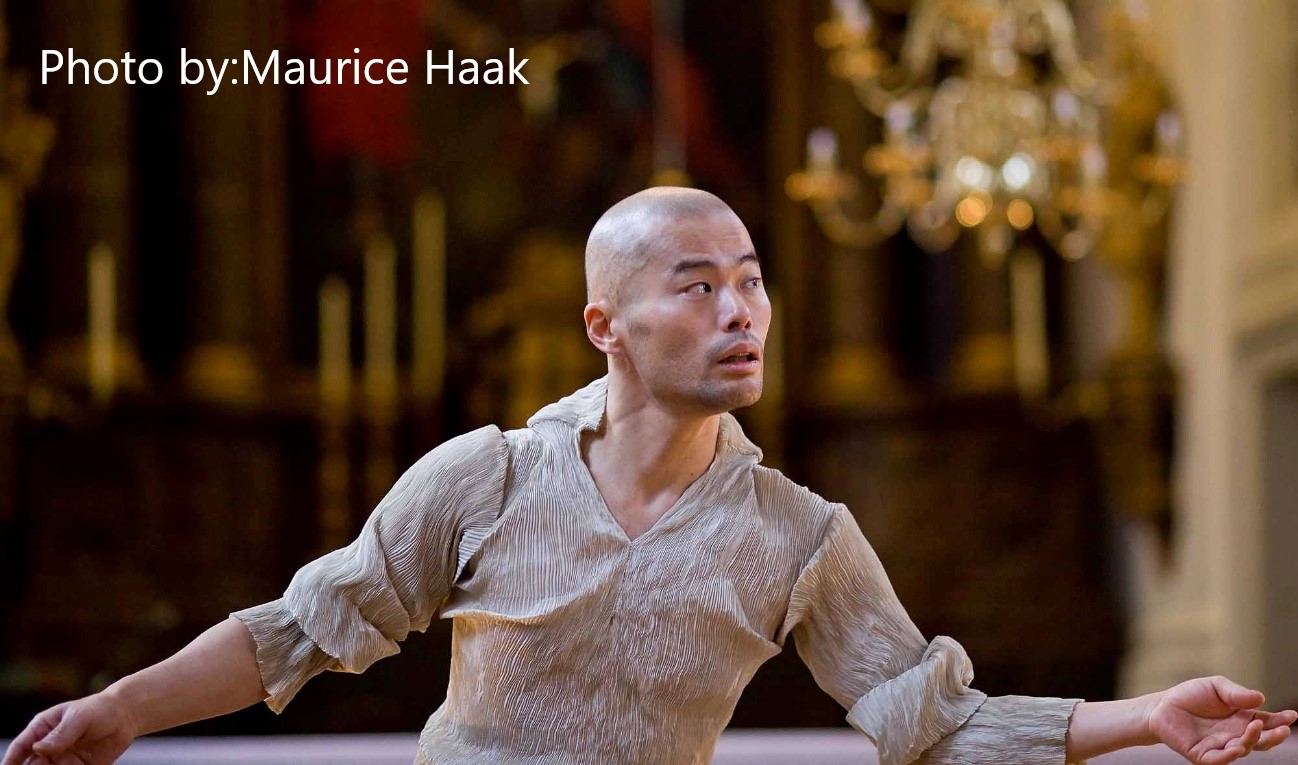
Last November, we received an email describing the Netherlands during the coronavirus crisis from Kenzo Kusuda, who has long been based in Amsterdam and continued working in countries throughout Europe.
“The coronavirus situation feels quite difficult both in the Netherlands, where I live, and throughout Europe. The Netherlands is a small country about the size of Kyushu. Today is November 1, and according to today’s news announcement here, the cumulative total of infections is 359,861, the number of deaths today alone is 39, and the cumulative total of deaths is 7,434.
Across the performing arts, cancellations and postponements also continue. Even where performances can take place, an audience of no more than 30 people is required, with 1 meter 50 centimeters of spacing and masks. Even that is often difficult, so there are many cancellations. Restaurants and cafés are closed too.
I was commissioned to choreograph a group piece for ten second-year dance students at the Amsterdam University of the Arts, and we only started rehearsals this Monday. The entire school is, of course, operating under coronavirus restrictions, with disinfection, ventilation, and masks compulsory. In various year groups and departments,
students testing positive for coronavirus continue to increase in some classes. In the second-year class I am working with, all ten came to the studio on the first day and we began creating, but the next day, Tuesday, two stayed home as a precaution, and on Wednesday another three were told to stay home. As a result, we had to rehearse simultaneously in a half-and-half situation, with five of the ten participating from home through Zoom and the other five rehearsing with me in the studio. Then, by Friday, the number of dancers staying home had risen to seven, and the school formally decided to close the class. Everyone in the class was to stay home for the next ten days, so rehearsals were interrupted and everyone went home. From next week, I too will choreograph for all ten dancers from home through Zoom. But because everyone will be on Zoom, perhaps it will actually be easier to focus our attention together. Everything is new, so there are times when I feel confused, but I intend to enjoy it.
Around the week after next, we may be able to rehearse and create the work in the studio, but even then there will be all sorts of conditions: dancers must keep at least 1 meter 50 centimeters apart; contact between dancers is entirely prohibited; bare feet are prohibited too (designated clean shoes or socks are allowed); hands must be disinfected before going onstage; we must not touch our faces directly with our hands; lying on the floor must also be checked; costumes are limited to those that prevent bare skin touching the floor, and so on. If all goes well, the performances will run for four days in mid-December. I think the audience will be limited to around 20 people at most for each performance. The first-year class alone has 24 people; among the second years, ten are in my work, and another choreographer’s work has seven or eight performers. Once lighting and sound staff, teachers, and other people involved are added, there are already more than enough people in the theater, so we may have to reduce the audience still further. There are many issues, such as what to do about changing rooms and waiting rooms, and no one can even predict with certainty whether we will be able to perform at all.
November 1 — Kenzo Kusuda”
As of March this year, 2021, the Netherlands has had more than one million infections in total and more than 15,000 deaths. According to later news, the students’ performance that Kenzo Kusuda had choreographed and planned to present in December was canceled and postponed at the last moment, leaving him with an almost indescribable feeling of powerlessness and emptiness. Nevertheless, even under severe restrictions, he has continued working: invited as a guest teacher to give workshops at Nederlands Dans Theater (NDT); live-streaming a solo dance with musicians, without an audience, at Dordrecht’s cathedral; and taking part in art projects under coronavirus conditions. He sent us the following account of how things have been recently.
“In the Netherlands, a considerably stricter lockdown was introduced in mid-December 2020, and a nighttime curfew was added.
The lockdown has now been extended until March 31. Demonstrations and riots opposing the coronavirus restrictions bill occur frequently too. Various opinions are exchanged, sometimes like whispers, sometimes like shouts. The world seems to be standing still, and at the same time to be shaking violently. All shops are closed except supermarkets, food shops, pharmacies, and the like. Naturally, theaters have also been closed continuously since last December. All concerts and dance performances have been canceled, and days with no clear outlook continue here in the Netherlands too.
As Brexit, political instability around the world, and differences in national policies—already recognized as problems—come increasingly into sharp relief, the extremely difficult coronavirus situation intensifies, as if to accelerate them further. In the EU, in Europe, where moving between countries had previously been relatively free and relaxed, I never imagined that the existence of ‘borders’ would come to be felt so powerfully. In the present coronavirus situation, even traveling overland from the Netherlands to neighboring Belgium or Germany is difficult. All the more so is exchange by air, crossing seas and borders. Dance as an expressive art has developed by valuing as a vital source of energy international exchange across borders, languages, and ethnicities: traveling back and forth, meeting, learning from one another, and stimulating one another. Today’s worldwide coronavirus situation is a major challenge for the international performance market, theaters, and international dance festivals spread around the world, which our predecessors painstakingly opened up little by little; for the networks of dance workshops held worldwide; and for the networks of dance academies, arts universities, and dance education institutions around the world that have developed through welcoming many international students. Above all, dance is a rare, fleeting, mysterious, lovable activity, like an endangered animal, flowering as people experience it live, share a space, hone and embody their sensibilities, and learn together in the same time. I can only fervently wish for a world in which the people who love dance and gather for it, the people who are meant to meet through it, can meet one another more and more.
I imagine that Japan too is in a truly difficult situation, amid the state of emergency and the various challenges of the coronavirus crisis. Even so, I firmly believe that all of us around the world, joining our hearts and matching our breaths like a slowly undulating ocean, will somehow be able to get through this difficult period together with strength.
March 12, 2021, in Amsterdam. Kenzo Kusuda”
Excerpt from Voice of Session House 2020
