
Thoughts from Continuing to Work in Lighting
Miho Ishizeki (lighting and design)
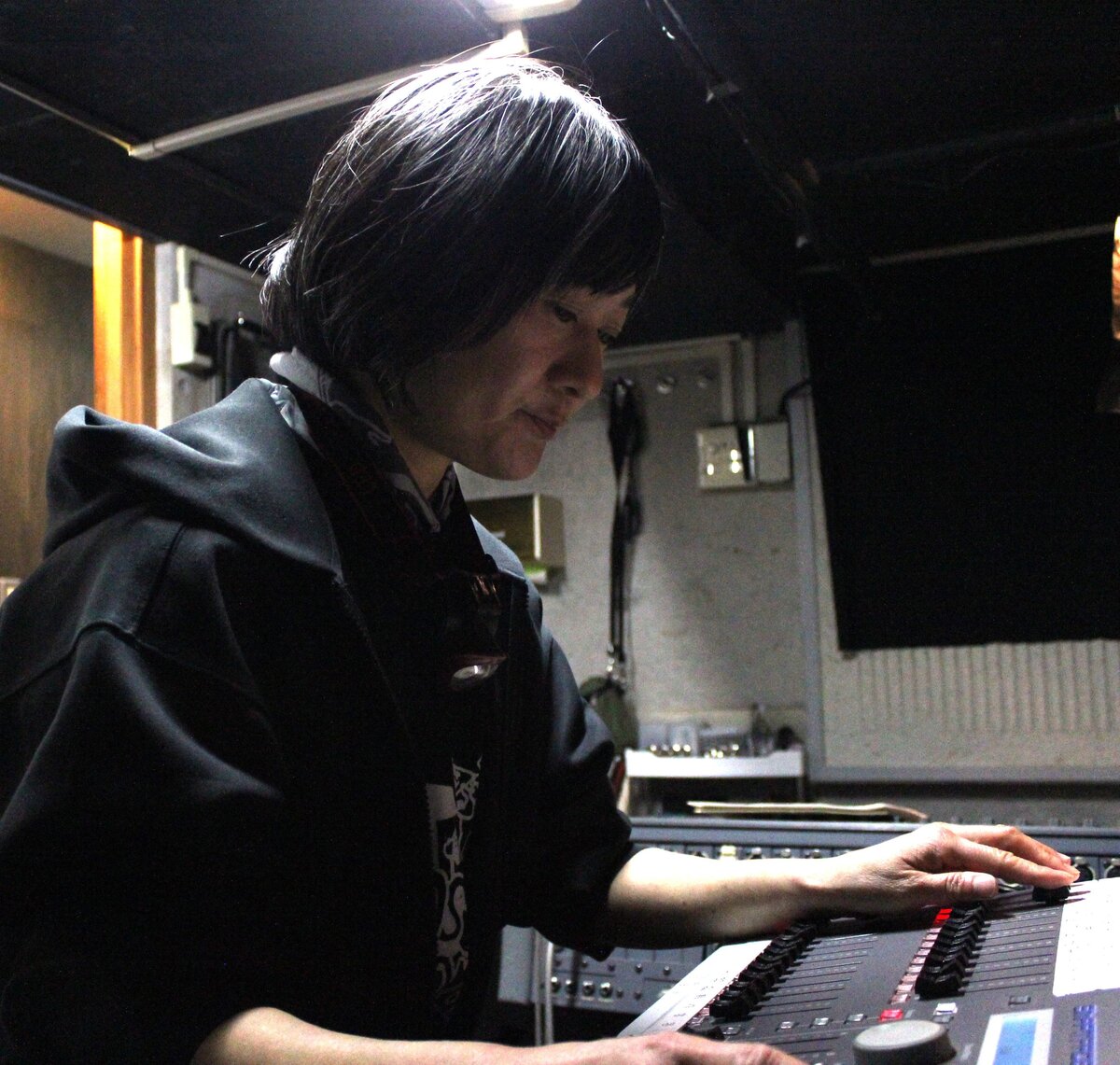
I once heard a theory that orchestral players initially choose their instrument according to their innate temperament, then develop a personality suited to it as they master it. So how has someone who has worked in lighting at Session House for about 30 years changed? Let me list whatever comes to mind.
○ When I see a sunset or the moon, I find myself thinking about the colors of light needed to recreate it, and I tend to look for the lighting fixtures in buildings. You cannot practice handling equipment unless it is nearby, but mental practice is free and available anytime. “Sunset” and “moonlit night” are common requests, so being able to imagine different variations can be useful. Beyond the stage, art museums, museums, aquariums and theme parks are good places to see accessible, enjoyable examples too.
○ I have become quieter
Lighting staff learn to make no sound and erase their presence when waiting in the wings of a hall, so as not to get in the way of performers and the stage manager. I think this is even more pronounced at Session House because the facility itself is compact. Specifically, I can suppress the sounds of breathing and sneezing, tend to choose work clothes with little fabric rustle, and think about accomplishing actions in the fewest movements. I also develop a poker face. Looking back, there was a period when I enjoyed spy films and memoirs by former CIA officers; perhaps I was unconsciously trying to learn something. Ethan Hunt’s actions are unnecessarily flashy, though, so apart from “be kind to your teammates,” I do not think he is much of a model.
○ When listening to music, I find myself thinking about how the lighting would develop
When I hear a piece used in a performance, I often remember the feeling of its cues. The reverse can happen too: a song I happen to hear in everyday life catches my interest, and I enjoy looking up its lyrics and structure (intro: 8 × 2 counts; verse A: 8 × 4 counts, and so on). Later I meet it again as music used in a performance, understand the flow of the work a little faster and develop affection for it—a small pleasure.
I feel that these experiences cultivate an attitude of “first accepting what I encounter.” As the years pass working on staff, I engage with many stage works and artists’ ideas, increasingly realizing how many people have worldviews beyond anything I could predict. I have come to think, “It is a shame to reject something without trying it.”
○ I become sensitive to sound
My desire not to miss a cue strengthens my ability to concentrate over short periods. Within that, I think I have become especially sensitive to sound. In my personal daily life, unusual sounds from running water or opening and closing doors bother me; I take hearing tests seriously; and, conversely, I stop playing games that test instant reactions, to conserve my energy.
Looking at it this way, the result is that since becoming a lighting staff member, my attitude toward sound has changed more than my attitude toward light itself. Lighting equipment is generally something you can use only after arriving at a theater or other venue. You cannot test it on your own equipment; all you can do beforehand is mental practice and calculations. That, I think, is why I devote my energies to arranging the conditions that will let me reach the light.
My goals from here are: ① to try approaches to lighting I have never experienced before, and ② to find ways to recover from fatigue as quickly as possible.
I hope to broaden the reach of my imagination and stay healthy, so that I can keep helping with the lighting a little longer.
