
Takahiro Mochizuki: Dance Bridge 2022 Report — Voice of Takahiro Mochizuki
In 2022, "Dance Bridge" took a different approach, presenting five programmes under the title "Three Dances." Alongside the performances, we also offered online streaming, after-talks and Zoom talks, in an attempt to deepen understanding of the works. Please listen to the coordinator’s voice.
Coordinator: Takahiro Mochizuki
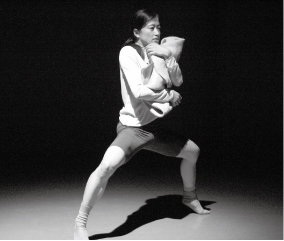
Mariko Kakizaki (柿崎麻莉子)
Dance Bridge 2022 consisted of five performances, with 15 groups taking part and sharing a theme in each programme. In order, these were "Three Boleros," which challenged participants to create works centred on Bolero; "Three Futures," by up-and-coming choreographers; "Three Virtual Reals," which attempted to bring virtual worlds into being through video and sound; "Three Swans," themed around Swan Lake; and "Three Heroes," themed around heroes.
Since the spread of COVID infections, declining audience attendance has been unavoidable in the performing arts. With the aim of rediscovering and communicating the fascination of contemporary dance, we introduced a new three-stage approach: ① "pre-performance lecture videos"—streamed video interviews with choreographers about the history of their themes and subject matter; ② "performances"; and ③ "post-performance talks"—Zoom discussions of impressions, with audiences and performers participating on the Wednesday evening after each performance.
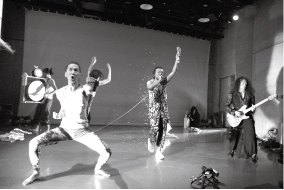
Team Kamogawa (チーム鴨川)
For the "pre-performance lecture videos," for example, we streamed conversations on a variety of genres centred on dance, including "How a Choreographer Confronts the Masterpiece Bolero," "A Futuristic, Leap-Ahead Conversation on Fusing Dance and Virtual Worlds," and "A Ballerina’s Everyday Life and What Swan Lake Means to a Ballerina." These offered glimpses into the process of making the works and into each choreographer’s understanding of dance, and can be said to have provided a good preliminary stage for viewing the works. In numerical terms, however, the combined views of all the videos amounted to only about 1,000, leaving the question of how to publicise them unresolved.
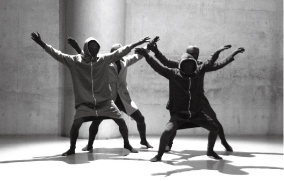
Bushman (ブッシュマン)
Next, what we emphasised in the "post-performance talks" was "audience-led participation." One challenge in contemporary arts management is how to connect the experience of viewing a work to what comes next. I thought a clue to a solution might lie in sharing with someone what one had received from the work, allowing the experience of viewing it to develop further. We tried to build a framework that also involved the choreographers, modelled on the opportunities audiences had before COVID to talk things over with one another at an izakaya after a performance.
With guidance from the coordinator, we were able to delve into the works across a wide range of subjects: the inner workings of the choreographers’ creative processes, their points of focus and explanations of their works; how individual dancers understood other choreographers’ works; resolving audience members’ questions; and dancers reminiscing together. There was something to gain for both the makers and the viewers.
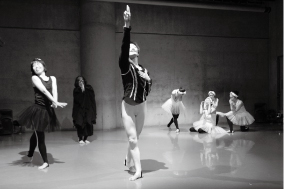
Magnum Madam (マグナム・マダム)
This is subjective, but scheduling the "post-performance talks" on Wednesday, a few days after the Saturday and Sunday performances, gave us time to turn the works over in our minds and proved a good opportunity. Starting from the simple question "Why has this stayed with me?" about fragments of dance that remained after viewing, new interpretations of the works emerged as we connected or rearranged the fragments. Contemporary dance is often described as "hard to understand!!" In the "post-performance talks," the sense of threads unravelling, and of new threads becoming intertwined, expanded my thinking. I believe there may be a hidden potential of contemporary dance in this secondary experience of viewing.
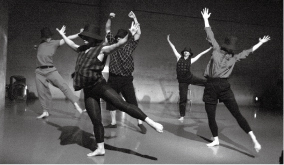
In addition to sharing themes, being able to explore the works in depth brought further focus to the "diversity" of contemporary dance, making it possible to grasp a phenomenon we might call the characteristics of a dance being the characteristics of an individual. Combining two ways of viewing—the luxurious experience of a live performance where people gather, and a post-performance reliving of that experience through gathering and exploring online—allowed us to propose one possible form of future theatre-going. That was the achievement of this project. I would like to sustain it and continue working for audiences’ experience of dance and for dance performance, including these post-performance "viewing-experience revisiting sessions."
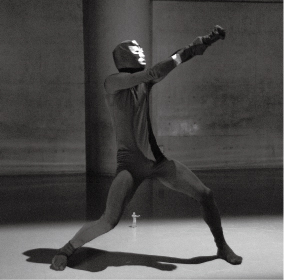
To finish, a little story. In Ryohei’s work in "Three Heroes," there was a scene where he wore the Argentina national team’s number 10 shirt, fell over and took a penalty kick. A few hours later, in the World Cup final, Messi was brought down and awarded a penalty. Messi scored the penalty, won the championship and truly became a "hero." It was an interesting viewing experience in which fragments received through watching dance connected with one another, and it became a memory I will probably never forget.
