
Session House Annual Report 2018: Ringo Project Report
Ryohei Kondo’s “Ringo Project—Kagurazaka Tosaka Project” again followed the previous year in featuring music performed from ideas by Kondo, pianist Asami Hirosawa (廣澤麻美), and Satoshi Ishibuchi on guitar and other instruments, together with five young women dancers. Kondo himself created numerous scenes while adding narration and subtitled video, presenting the pleasures of dance through this approach.
About “Tosaka Project—THE ORIGIN 2”
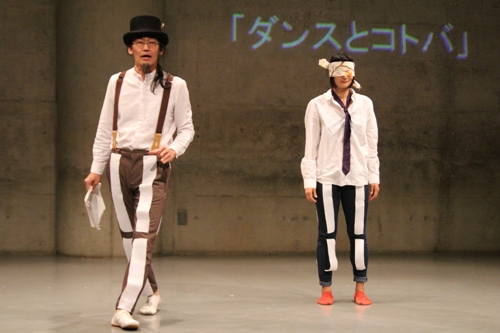
“Tosaka Project Origin 2,” choreographed and directed by Ryohei Kondo, featured young dancers. From beginning to end, this work sought to enlighten the audience about how dance is made.
Its content was very easy to understand. It began by concretely demonstrating variations on “walking” and “the moment something becomes choreography,” and finally connected all the movements performed since the beginning of the work, completing a single long dance scene before our eyes.
After the first day’s performance, a fourth-grade girl who said she was learning ballet told me, “It was my first time seeing contemporary dance, but it was really easy to understand!” There must have been something that came across clearly regardless of age.
Attempts of this kind, in which dancers communicate something like “how to watch dance” through a work, are uncommon even worldwide. Of course, “meta-dance” methods communicating “what dance is,” like those used in postmodern dance, have been attempted repeatedly, but this work is nothing of that kind. The significance of the question “What meanings do everyday actions take on in dance’s space-time?” being voiced by practitioners rather than analyzed by researchers or critics is, after all, its overwhelming reality and authenticity, grounded in practice. Naturally, Kondo’s direction also mixes in “fooling around” and “irony” in a good sense. As Kondo himself tells the audience at the outset, “things true and untrue about dance,” this is not a documentary work presenting “actual facts” in what is performed. Rather, its reality lies in exposing to the audience how dancers themselves “give—or try to give—some meaning to movement.” Whether through facial expressions, dance forms such as attitude or en haut, or ways of partnering in contact work, many levels of meaning are presented, from the visual to those that can be translated into language.
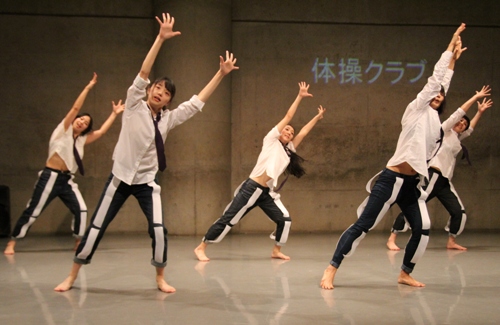
This attempt also challenges “the difficulty and high threshold of contemporary dance,” and after the performance each audience member will probably take home hints for deciphering dance.
Of course, how one views a work is free and is not restricted by anyone. But it is not unusual for someone seeing dance for the first time to end up saying, “I didn’t understand anything.”
Might this work not have amply demonstrated one model of how explanation can be offered in such a case?
Satoshi Ishibuchi (Associate Professor, Faculty of Literature, Daito Bunka University; Condors)
Excerpt from Session House Annual Report 2018
Photographs from the performances on February 16 and 17, 2019
Ringo Project: Ryohei Kondo’s “Kagurazaka Tosaka Project,” “THE ORIGIN 2”
