
Session House Annual Report 2018
Garden Activities Report Garden Activities Report
In 2018, Session House 2F Garden again served as a venue for diverse activities: our own projects and jointly organized or collaborative projects, as well as exhibitions by rental users, theater performances, talks, life-drawing sessions, and more.
A Record of Our Own, Jointly Organized, and Collaborative Projects
March 7–14
Sanki Exhibition commemorating the 90th anniversary of Tokyo Metropolitan Third Commercial High School (Norio Toyoda [豊田紀雄], Asako Kitajima [北島朝子], Kenji Mizukami [水上健二])
March 16–25
Yuki Goto (後藤悠樹) Photography Exhibition, “Do Not Forget Sakhalin”
April 4–7
Naoko Sakamoto (さかもと直子), flower exhibition (T)
July 18–23
Art Exhibition for Bastille Day (T)
September 19–24
F Exhibition vol.3, Scenery 2018 (T)
October 7–15
Kayo Asakura (朝倉加代) Exhibition, Reimagine
Four Mademoiselle Cinema members participated in the OP fashion show (T)
October 19–28
Kaku Kosenji (高專寺赫) Exhibition
November 6–12
Michiko Arikawa (有川通子) Exhibition, “Song of the Earth”
November 16–19
Palm-of-the-Hand Market vol.7 (T)
November 30–December 5
Noël Exhibition (T)
December 5–9
Wa Wa Wa Haiku Exhibition (T)
* The life-drawing sessions, whose leadership passed from Junichi Matsumoto (松本純一) to Takashi Yoshida (吉田卓史), were held 12 times.
* (T) indicates a project proposed by Norio Toyoda (豊田紀雄) of Engeki Bijutsusha (演劇美術社).
* Ichie Watanabe’s talk series, “Let’s Listen to Fukushima’s Voices!”, was held in January, May, August, and November.
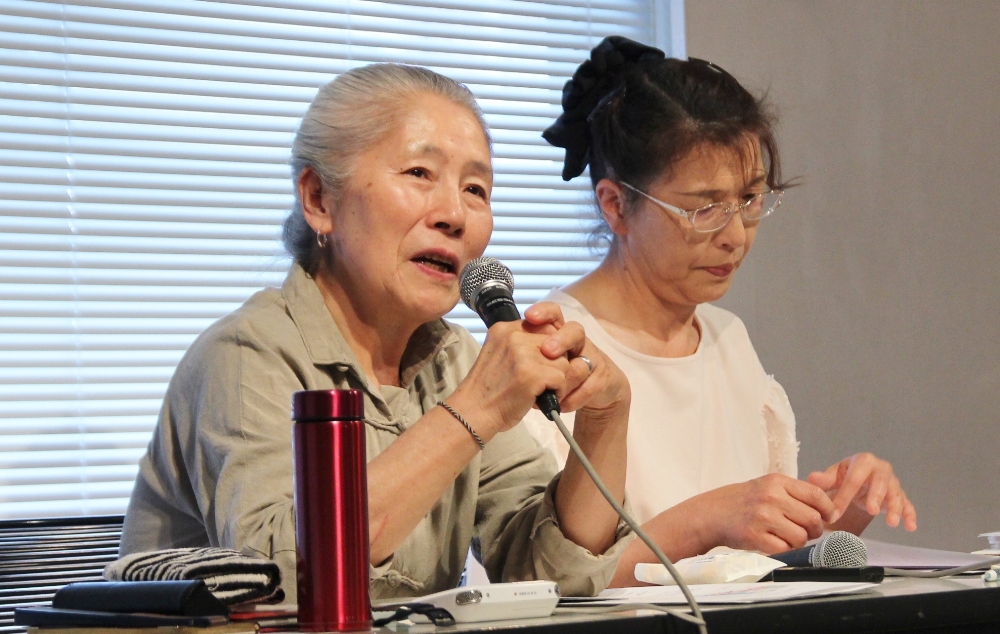
Ichie Watanabe’s talk series “Let’s Listen to Fukushima’s Voices!”, which began at the Garden one year after the 2011 Great East Japan Earthquake, was held four times last year too. It continued to convey the voices of people in the disaster-affected areas who, still under the effects of residual radioactivity, face uncertainty over issues such as returning to their hometowns. It is positioned as something that should continue in 2019 as well.
We have previously held photography exhibitions on historical issues such as military “comfort women.” Last year, photographer Yuki Goto (後藤悠樹) held an exhibition focusing on Japanese people remaining in Sakhalin after the war, living alongside Koreans and Russians. As an initiative raising questions from the younger generation, it received substantial coverage in newspapers and other media, and drew many visitors, with talks held as well.
Excerpt from Session House Annual Report 2018
Photograph: Ichie Watanabe’s talk series
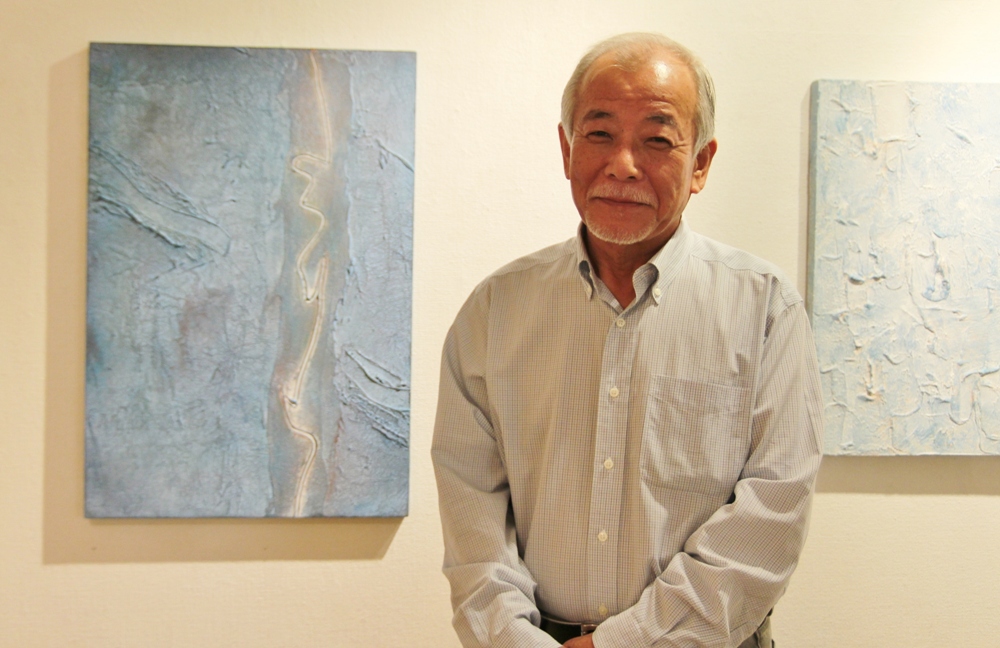
While many group and solo exhibitions were held through Norio Toyoda (豊田紀雄), who devises various collaborative projects every year, Kaku Kosenji (高專寺赫), Michiko Arikawa (有川通子), and others showed, through their solo exhibitions, painting practices unique to veteran artists. Amid the increasing digitization of visual expression, these exhibitions demonstrated that fine art is alive and well. One of them, Mr. Kosenji, who has long devoted himself to expressing an abstract world through color with a particular attention to matière, contributed a piece expressing gratitude to the teacher he met at an elementary school in a mountain town in Hiroshima, the starting point of his painting life.
To My Teacher, T. H.
Teacher T, it has been a very long time. Have you been well?
You took charge of our class when we were in the third grade of elementary school. Looking back at those days, each and every scene fills me with nostalgia. School life was never so enjoyable.
After cleaning, there was “snack time,” and you gave us money so that we could take turns going to the nearby shop. Once I began to understand a little about the world, I realized that those were dreamlike times. Lessons were interesting too, with many digressions. I think perhaps you wanted us to discover ways of thinking that were multifaceted rather than one-sided. Our friendly, harmonious classroom was wonderful. That free, unrestrained year in the third grade was a precious experience.
I think it was around September. By chance, I looked out the window and saw you painting in the schoolyard. I went outside and joined you. You were painting the old wooden school building and the thick pine tree in the schoolyard.
That painting remained displayed in the corridor even after you returned to Peru, where you were born. I felt that you had painted it as a gift to us. You were tall, with strongly sculpted features. I am grateful that you continued exchanging letters with me until I was in my first year of junior high school.
I think that seeing you face the canvas so sincerely was what prompted me to aspire to painting. When I entered junior high school, I joined the art club and began to immerse myself in painting because you had encouraged me.
I painted in oils for about twenty-five years, including my student days. I now make works using acrylic paints. People speak of water and oil, but since I began using acrylics I have made many discoveries: the interest of the material, its ability to produce powerful expression despite being water-based, and more. It is an extremely appealing material.
Teacher, I am doing well. Please stay well yourself.
Respectfully, Kaku Kosenji (高專寺赫)
Excerpt from Session House Annual Report 2018
Photograph: taken at the Kaku Kosenji (高專寺赫) Exhibition, October 19–28, 2018
Editor’s Afterword
Today’s world is swept by populism and “pressure to conform” that suppresses minority opinions. Yet there is something I learned through writer Yoshie Hotta’s biography of Montaigne.
In sixteenth-century Europe, as Protestants advocating the Reformation emerged and bloody conflicts with Catholics were repeated, humanists such as Montaigne, Erasmus, Thomas More, and La Boétie appeared. Their advocacy of the importance of “tolerance” was, it says, a major event.
They rejected treating their own ideas as absolute and forcing them on others, and explained the importance of listening to others’ opinions and discussing them. “I am entirely free of the error of judging others by my own measure.
Though I think I myself am bound by a particular form, I do not impose it on others.” (Montaigne, Essays.) It may seem like the distant past, but I feel that such statements contain much to which we should listen anew today.
In this Annual Report too, since last year we have placed our emphasis on the exchange of various opinions among many people. From this issue onward, we want still more to make it a place where dancers, choreographers, and artists living in the practical field can discuss freely what they have done and what they are trying to challenge, listen to others’ voices, and communicate in their own words, carefully thought through on the basis of experience. With that intention, we have asked them to contribute.
Rather than disposing of things with the single phrase “I like it,” I hope this small publication will become one place for sessions in which people exchange opinions and debate actively. (T.I)
Edited by: Session House Planning Office (Takashi Ito, Michitaka Ueda)
Published by: Session House, 158 Yaraicho, Shinjuku-ku, Tokyo 162-0805, Japan
TEL.03-3266-0461 FAX.03-3266-0772
E-mail:mail@session-house.net URL:www.session-house.net
